Quick answer: Carat weight tells you how much a gemstone weighs, not how large it looks or how attractive it is. Compare millimeter dimensions first, then examine color, cut, clarity, treatment disclosures and the evidence behind the seller’s claims. Different gem materials have different densities, and cutting proportions also affect visible size. Before paying, make sure you have a practical way to inspect and return the stone. (4cs.gia.edu)
The most useful comparison is not “Which stone has more carats?” It is “Which stone meets my size, appearance and identification requirements, with enough information to make the purchase?”
Start a comparison sheet for your shortlisted listings. Record the stated material, natural or laboratory-grown status, weight, dimensions, treatment information, report details, total price and return conditions. Mark missing information unknown, rather than assuming the favorable answer.
1. Compare millimeter dimensions before carat weight
A metric carat equals 0.2 grams. It is a weight measurement—not a diameter, length or quality grade. (gia.edu)
For a loose gemstone, request:
- Length and width: the outline you see from above.
- Depth: the top-to-bottom measurement.
- Shape and cutting style: such as an oval mixed cut or rectangular step cut.
“Face-up” means viewed from the top, as a stone would normally be seen in jewelry.
Two factors explain why equal-weight stones can differ in size:
Material density. Different gemstone materials pack different amounts of mass into the same volume. At equal weight, the denser material occupies less volume.
Cutting proportions. Weight can sit below the visible outline. A deep stone may weigh more without offering a correspondingly larger face-up appearance. GIA illustrates this problem with diamonds that carry weight below the girdle—the edge separating the upper and lower portions of a faceted stone. (4cs.gia.edu)
Do not use a generic “one-carat size chart” across different gem species. Compare actual measurements.
If you are buying for an existing setting, send the measurements to the jeweler before ordering. Ask whether the stone’s outline and depth are suitable; do not assume that a matching carat weight establishes fit.
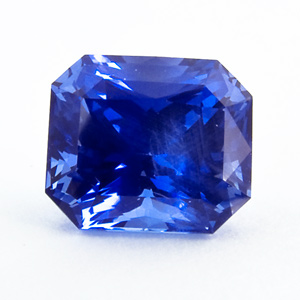

2. Work through an equal-weight comparison
Consider these hypothetical listings, created only to demonstrate the comparison method. They are not actual inventory, typical size standards or verified gemstones.
| Listing detail | Stone A | Stone B |
|---|---|---|
| Advertised material | Sapphire | Sapphire |
| Advertised weight | 1.00 ct | 1.00 ct |
| Shape | Round | Round |
| Listed diameter | 6.0 mm | 6.5 mm |
| Depth | Not supplied | Not supplied |
| Treatment evidence | Seller statement only | Seller statement only |
Both stones have the same advertised weight, but Stone B has the larger listed face-up diameter.
Approximating each outline as a circle:
- Stone A: π × 3.0² ≈ 28.3 mm²
- Stone B: π × 3.25² ≈ 33.2 mm²
Stone B’s calculated outline area is about 17% larger. This is geometry applied to invented example dimensions—not a prediction of how much larger a real stone will appear.
The correct conclusion is narrow: B has the larger advertised outline. You cannot yet conclude that it has better cut, stronger color, higher value or suitable proportions. Equal weight does not resolve those questions. (4cs.gia.edu)
Your next action is to request both depths, comparable face-up videos and clearer treatment evidence. If visible size is your priority, B deserves closer inspection—not an automatic purchase.
3. Compare color under stated lighting, not just in thumbnails
Lighting can substantially change a gemstone photograph. GIA’s photography guidance shows how direct light can create bright reflections and darken parts of a transparent stone, while diffused light presents its color differently. Mixed lighting also complicates photography. (gia.edu)
Ask sellers for a comparable set of views:
- A straight-on face-up photograph.
- A side view showing depth.
- A slow video with modest movement.
- Separate views in diffuse daylight and ordinary indoor lighting.
- Confirmation that the images show the exact stone being offered.
Also ask whether the pictures have had color or saturation adjustments. Treat the answer as disclosure, not proof of accuracy.
Use plain-language color notes rather than “better blue” or “more premium”:
- What is the main color?
- Is there a secondary tint?
- Does it look light, medium or dark?
- Is the color vivid or subdued?
- Are there distinctly lighter or darker areas?
More darkness is not automatically better color. For blue sapphire, GIA emphasizes strong saturation without darkening the stone enough to compromise brightness. That is sapphire-specific guidance, not a universal ideal for every gemstone. (gia.edu)
A useful seller question is: “Which image best represents this stone in ordinary indoor light?”
4. Examine cut, transparency and inclusions separately
Shape and cut quality are different things. “Oval” describes an outline; it does not establish how well the facets, proportions and polish work together. GIA identifies these as important elements of colored-stone cut quality. (gia.edu)
One warning sign is windowing: a see-through area where light passes through the stone rather than returning toward the viewer. GIA explains that overly shallow central pavilion facets can create this effect. (gia.edu)
When reviewing photographs and video, ask:
- Does the center remain see-through in the normal face-up position?
- Does the stone look lively across its face, or mainly around its edge?
- Can the seller supply a closer view of any apparent surface damage?
- Are darker areas temporary during movement, or consistently distracting?
These are screening questions, not a remote cut grade.
Assess transparency and inclusions separately. Ask whether the stone looks clear, hazy or visibly included in person, and whether anything is visible without magnification. Inclusion expectations differ by material; some gems commonly contain inclusions, and certain inclusions can contribute desirable appearance. (gia.edu)
If a seller uses “eye-clean,” ask what viewing distance, lighting and directions that description covers. A magnified photograph and an ordinary viewing assessment answer different questions.
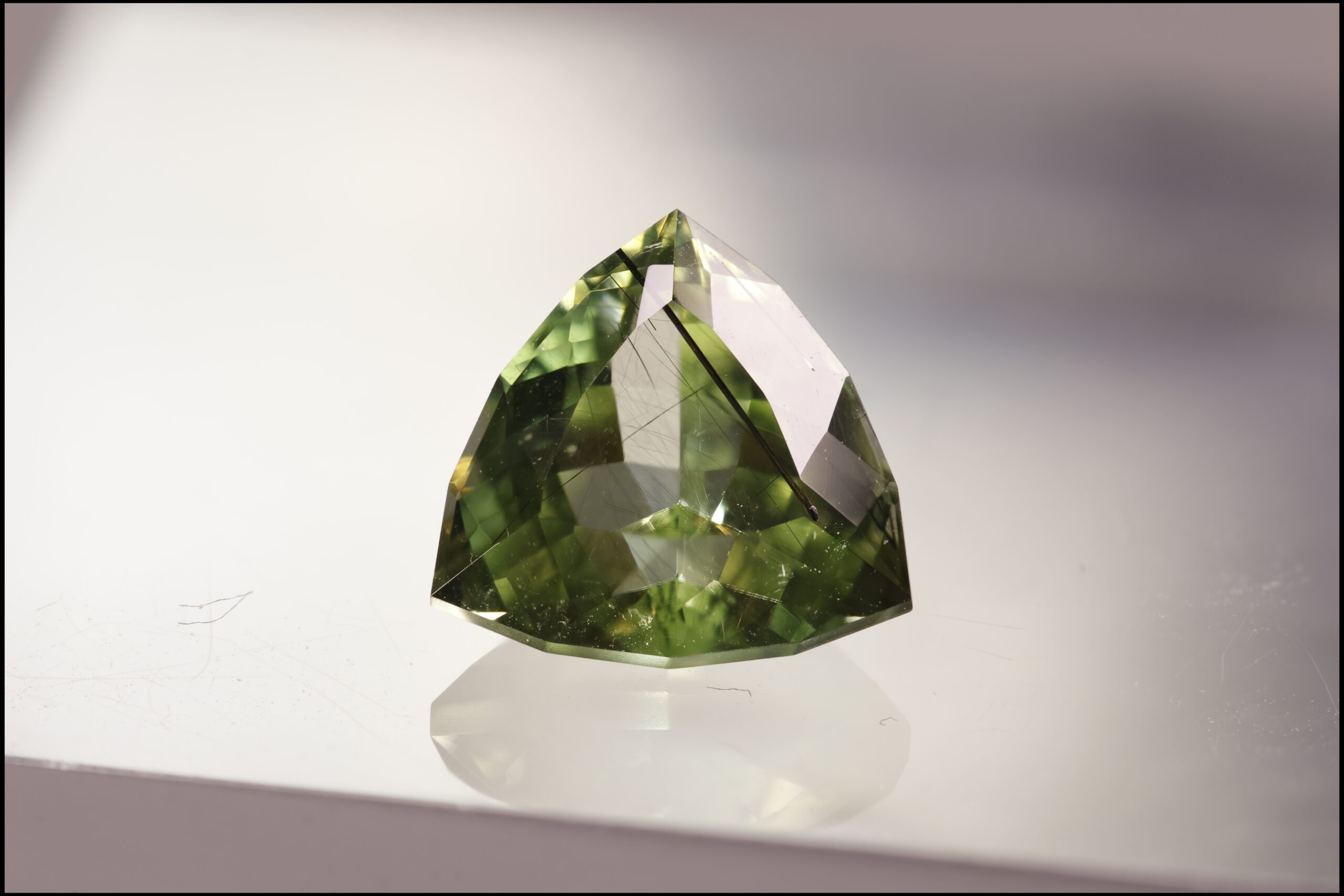
/ Eminerals.cz Source CC BY 4.0

5. Treat “AAA” and similar labels as seller-defined descriptions
Do not assume that one seller’s “AAA” gemstone equals another seller’s “AAA.”
GIA notes that companies create their own colored-stone quality descriptions. A trade explanation distributed through an AGTA newsletter likewise describes A, AA and AAA as inventory categories that do not translate consistently between dealers. (my.gia.edu)
The label may help distinguish options within one seller’s range. It does not, by itself, provide a transferable quality standard.
Ask:
“What specific color, clarity and cut criteria does this grade represent, and who assigned it?”
Then replace the label on your comparison sheet with the actual criteria supplied. If the answer remains “our finest quality,” record it as an undefined seller description.
Apply similar caution to “investment grade,” “museum quality” or “premium.” Ask what verifiable characteristic the phrase is intended to describe.
Do not confuse these sales descriptions with laboratory identification. GIA’s sapphire guidance states that its colored-stone identification reports do not provide a quality grade. (gia.edu)
6. Get treatment disclosures before comparing price
Treatment is part of what you are buying. GIA’s treatment overview explains that treatments can alter appearance, may have different levels of permanence and can require special care. (gia.edu)
Ask the seller to state, in writing:
- Whether the material is natural, laboratory-grown or an imitation.
- Which treatments are known.
- Whether that information comes from laboratory testing or the seller’s assessment.
- Whether treatment status is unknown.
- What cleaning, setting or repair precautions apply.
Depending on the material, relevant treatments may include heating, dyeing, coating, irradiation, diffusion or fracture filling. These are not interchangeable processes. For example, GIA explains that some surface coatings can be damaged and some filling materials need particular handling precautions. (gia.edu)
“Natural” does not answer the treatment question. Request both pieces of information separately.
Do not automatically reject every treated stone. Instead, decide whether the disclosed treatment and care requirements suit your intended use. Avoid treating an unsupported “untreated” claim as equivalent to a laboratory finding.
For price comparison, record both the total purchase price and price per carat. Use price per carat only after checking that the materials and relevant attributes are reasonably comparable.
7. Use independent identification to answer a defined question
An independent report becomes especially useful when a significant purchase depends on identity, natural versus laboratory-grown status, treatment findings or a geographic-origin claim.
GIA’s sapphire guidance describes identification reports as documenting characteristics such as weight, measurements, shape, cutting style and color, determining natural or laboratory-grown status, and indicating detectable treatments. Geographic origin is an opinion offered where the applicable service and evidence allow it. (gia.edu)
Ask what the report actually establishes. Do not treat the existence of a report as proof that every claim in the listing was tested.
Before relying on one:
- Request a legible copy.
- Check the issuing laboratory and report number.
- Use the laboratory’s own verification facility where available.
- Compare the recorded measurements and other details with the listing.
- Ask a qualified gemologist to help resolve discrepancies.
GIA’s buyer guidance specifically directs readers to verify report information against its archived database. (gia.edu)
An identification report is not a substitute for deciding whether you like the stone, and a report without quality analysis does not establish that it is “AAA.” Ask separately for an appraisal if your question concerns monetary value.
If arranging testing after delivery, obtain enough return time for the proposed examination before purchasing.
8. Make the return policy part of your final checklist
Online photographs cannot replace an opportunity to examine the purchase. GIA’s online buying guidance emphasizes detailed images, authentication and a return policy that permits inspection. (4cs.gia.edu)
Read the actual terms—not merely a “returns accepted” badge. Confirm:
- When the return period starts.
- Whether you must request authorization.
- Whether the deadline concerns dispatch or arrival.
- Who pays return shipping and insurance.
- Whether fees or nonrefundable charges apply.
- Whether independent examination is permitted.
- Whether setting, alteration or damage affects eligibility.
Save the listing, images, invoice and written answers.
On arrival, compare the stone with the promised dimensions and appearance. View it under the lighting conditions you requested, and resolve concerns before authorizing setting or alterations.
Your final purchase checklist should have clear answers:
- Size: Are length, width and depth supplied?
- Appearance: Have I seen useful views of the exact stone?
- Identity: What evidence supports the material description?
- Treatment: Is it disclosed, tested or explicitly unknown?
- Grade labels: Do I understand their seller-specific meaning?
- Report: Does its scope address the claim I care about?
- Returns: Can I inspect it and return it within workable terms?
The best listing is not necessarily the heaviest. Choose the stone whose documented attributes meet your needs—and leave unresolved claims marked unknown, not probably fine.