Quick answer
Amethyst, citrine and rose quartz are varieties of quartz distinguished mainly by color. Chalcedony belongs to the same broad gemstone family, but its name describes a fine-grained crystalline material rather than one particular color. Agate is a banded form of chalcedony. Different colors and textures explain the different names—not necessarily different mineral species. (gia.edu)
Before buying: ask separately about material identity, natural or laboratory-grown origin, and treatments. A variety name or photograph does not answer all three questions.
1. Quartz is the species; amethyst is a variety
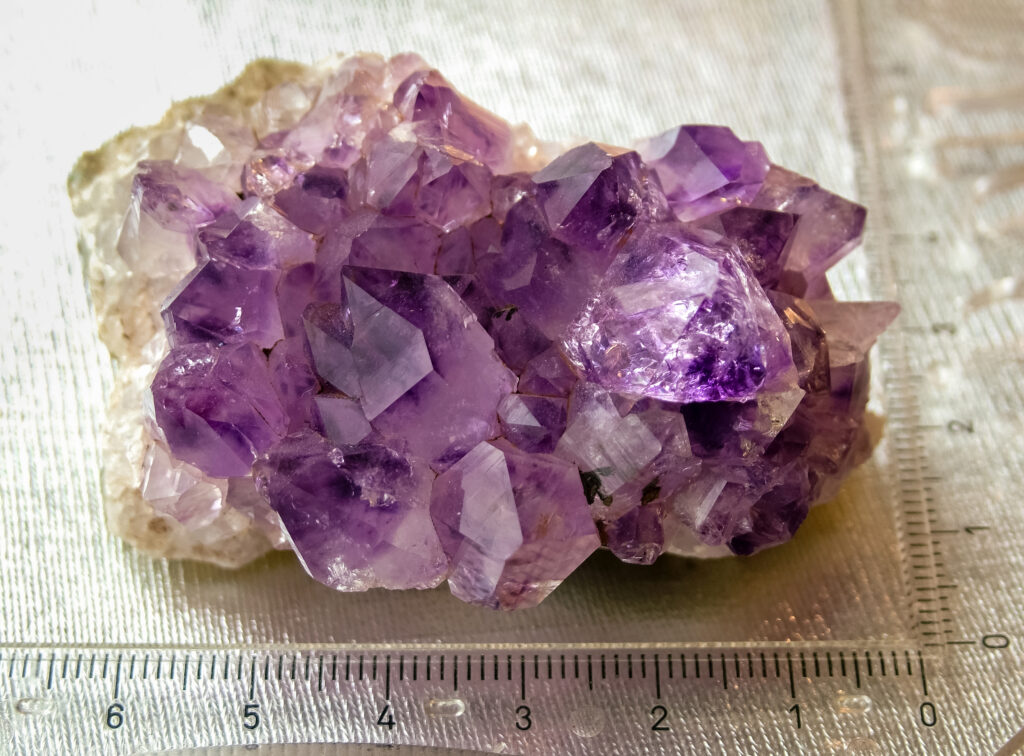
A mineral species is the underlying mineral identity. A variety is a named form within that species, often distinguished by color or another recognizable characteristic. GIA describes amethyst explicitly as the purple variety of the quartz mineral species. Citrine and rose quartz are also quartz varieties. (gia.edu)
Quartz consists of silicon and oxygen, expressed by the formula SiO₂, or silicon dioxide. Pure quartz is colorless. Small amounts of other elements, inclusions and changes within its structure can produce very different appearances. That is why a purple gemstone and a cloudy pink carving can both be quartz. (naturalhistory.si.edu)
Here is a simplified map of the names covered in this guide:
QUARTZ GEMSTONE FAMILY
│
├── Amethyst
│   └── Purple quartz
│
├── Citrine
│   └── Transparent yellow-to-brownish-orange quartz
│
├── Rose quartz
│   └── Pink quartz, usually found in massive form
│
└── Chalcedony
    └── Fine-grained, fibrous crystalline silica
        └── Agate: a banded form
The diagram is a practical gemstone-name guide, not an exhaustive mineral classification. In particular, chalcedony can contain both quartz and moganite, another crystalline form of silicon dioxide. Calling it part of the quartz family is useful, but “every part is necessarily pure quartz” would be an oversimplification. (gia.edu)
2. Crystal size and texture matter as much as color
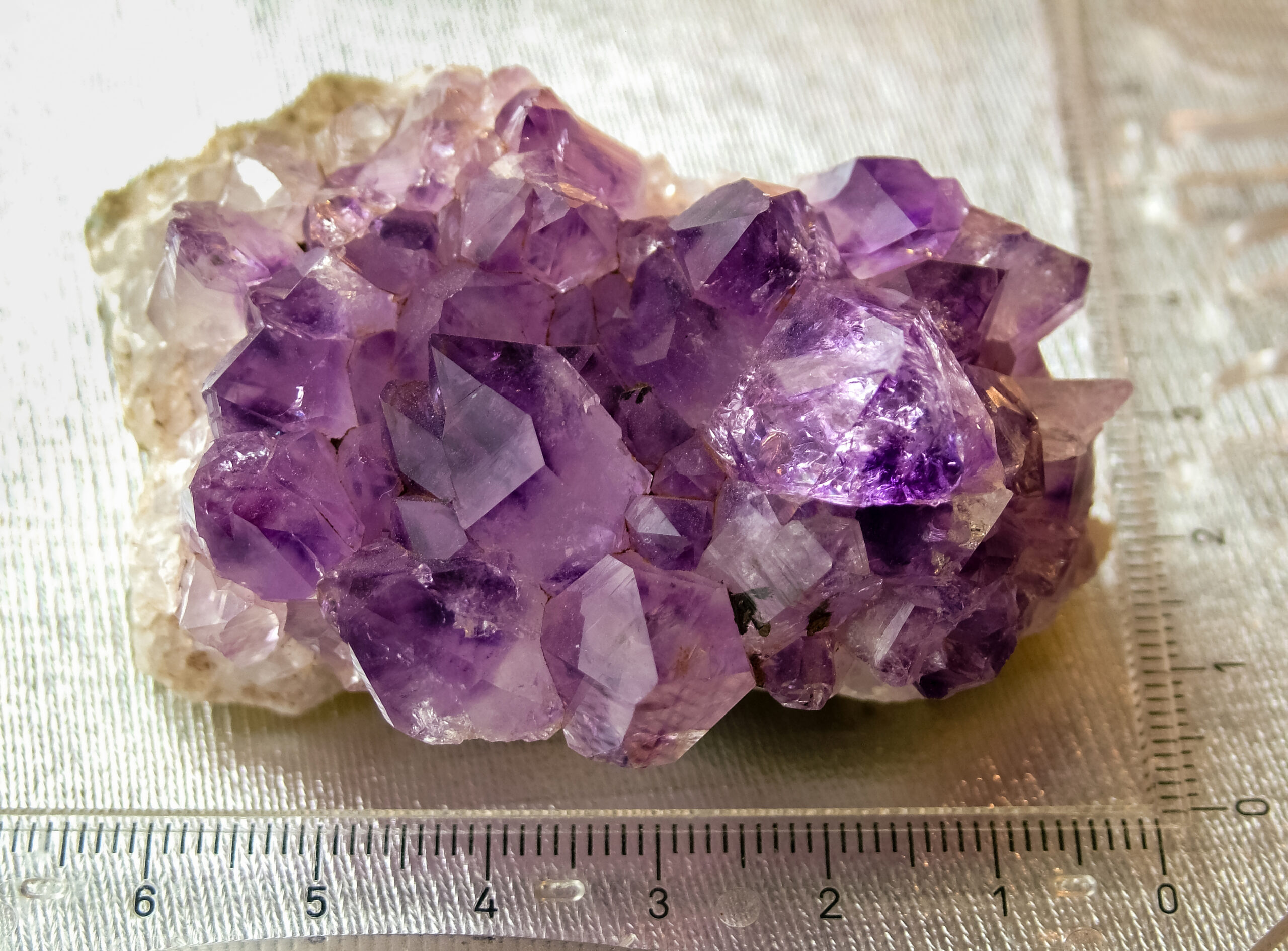
An amethyst specimen may show individual crystals large enough to recognize without magnification. GIA illustrates the familiar quartz form: a six-sided column ending in a pyramid-shaped tip. A cut gemstone, however, has manufactured facets; those polished surfaces should not be confused with its original growth faces. (gia.edu)
Chalcedony has a different texture. Its constituent crystals are extremely small and commonly fibrous. The terms microcrystalline and cryptocrystalline refer to these very fine crystal sizes. A smooth-looking piece of chalcedony is therefore crystalline even though you cannot pick out individual crystals with your eyes. (origin.prod.author.gia.edu)
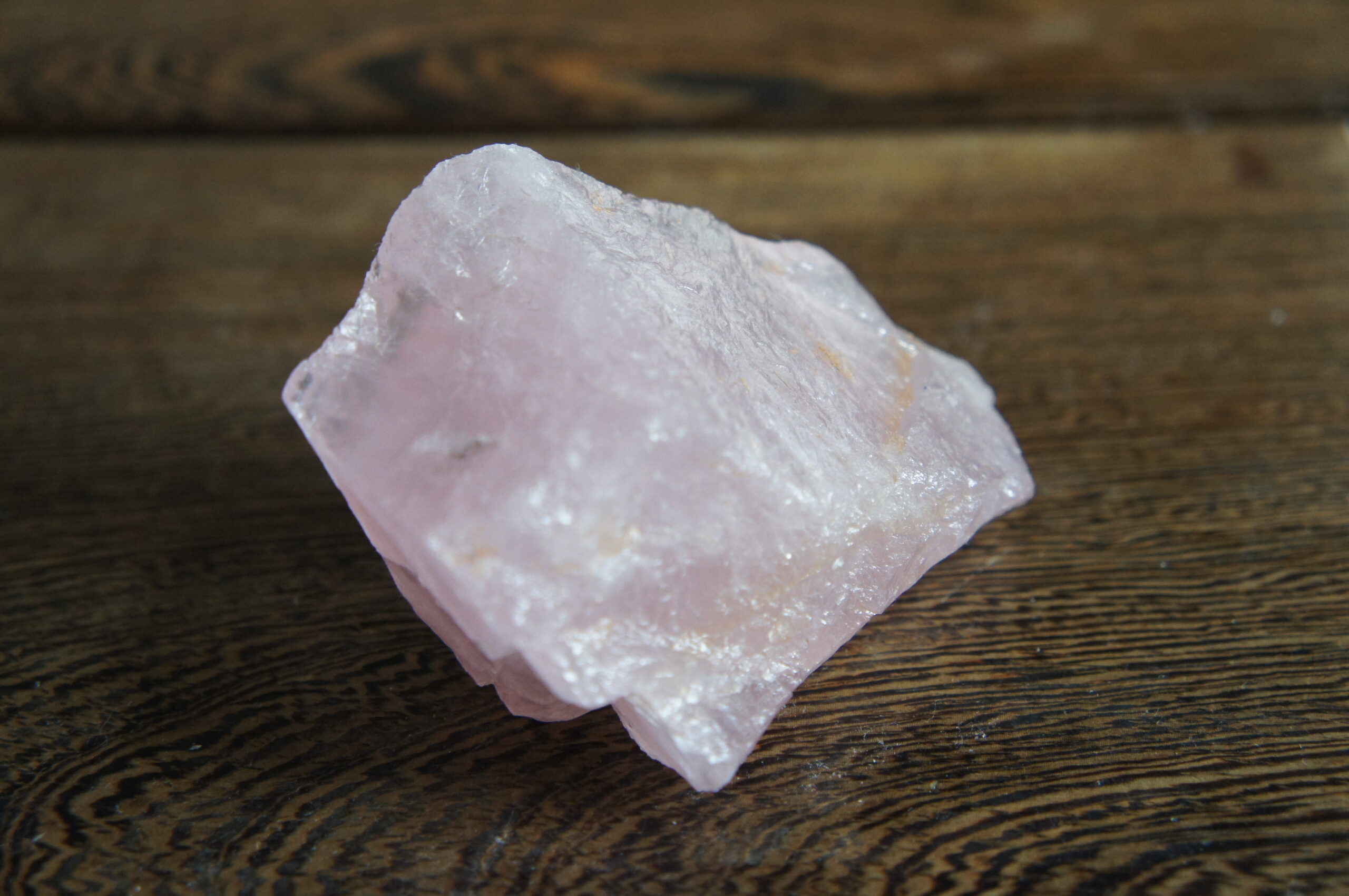
Rose quartz introduces another useful word: massive. In mineral descriptions, this means material occurring as a mass rather than displaying well-developed individual crystal outlines. It does not mean exceptionally large, and it does not mean noncrystalline. GIA notes that rose quartz usually occurs in massive form. (gia.edu)
For a collector, these distinctions help organize observations. Record “visible crystal points,” “smooth fine-grained texture” or “massive pink material” separately from the seller’s identification. An observation is useful evidence, but it is not automatically a confirmed mineral name.
3. Amethyst: purple color with an iron-related mechanism
Amethyst ranges from pale lilac to deep purple. Its hue can lean bluish or reddish, and its color may be uneven. GIA describes color zoning: angular areas of lighter and darker purple within the material. (gia.edu)
The purple color involves iron associated with the quartz structure and radiation-induced color centers. A color center is a structural feature that affects how the material absorbs light. Research on amethyst links these centers to radiation acting on iron-bearing precursor sites in quartz. The mechanism is more specific than simply saying “iron makes every quartz purple.” (naturalhistory.si.edu)
Natural radiation is part of that geological explanation; it is not, by itself, evidence that a seller has artificially treated a stone.
Treatments nevertheless matter. Heating can lighten some overly dark amethyst, and irradiation can produce amethyst color in suitable quartz. Laboratory-grown amethyst also exists. “Amethyst” therefore identifies a variety, not a complete account of how a particular stone formed or acquired its present appearance. (gia.edu)
Practical check: ask, “Is this natural or laboratory-grown quartz, and what treatments are known?” Do not replace those questions with “Is the purple real?” That wording leaves too much room for different interpretations.

4. Citrine: yellow quartz is not necessarily untreated quartz
Citrine is transparent quartz ranging from pale yellow to brownish orange. GIA’s introductory explanation associates its yellow-to-orange color with traces of iron. The important buying distinction is whether the offered color occurred naturally or resulted from treatment. (gia.edu)
GIA states that natural citrine is rare and that most citrine on the market results from heating amethyst. Some suitable amethyst changes from purple to yellow or orange during treatment. This is a color change within quartz—not a conversion into topaz or another mineral species. (gia.edu)
Keep three questions separate:
- Identity: is the material citrine quartz?
- Growth origin: is it natural or laboratory-grown?
- Treatment: was its color altered after growth?
Laboratory-grown citrine exists, so heat treatment is not the only distinction worth asking about. (gia.edu)
A description such as “natural citrine” needs clarification. Does the seller mean naturally formed quartz, or naturally occurring yellow color with no treatment? Ask for the intended meaning in writing.
Neither “pale lemon yellow” nor “deep orange” should serve as your personal certificate of treatment status. Use the photograph to assess whether you like the appearance, then seek evidence for the separate treatment claim. Gemcubes’ Disclaimer explains why appearance cannot establish untreated status.
5. Rose quartz: pink color and cloudiness are related but distinct
Rose quartz ranges from almost-white pink to deeper pink. It commonly has a cloudy, translucent appearance caused by microscopic mineral inclusions. Translucent means light passes through, but you cannot see a sharp image through the material. (gia.edu)
Research summarized in GIA’s 2025 review connects the pink color of massive rose quartz with extremely small fibrous inclusions associated with dumortierite. Iron and titanium within those inclusions contribute to the color mechanism. This differs from amethyst’s iron-related color centers in the quartz structure. (origin.prod.author.gia.edu)
There is also an important terminology complication: well-formed pink quartz crystals are sometimes called rose quartz, but their color mechanism and stability can differ from ordinary massive rose quartz. The review describes pink crystal material that can lose color under ultraviolet light or mild heat. Do not assume every pink quartz specimen behaves identically. (origin.prod.author.gia.edu)
Cloudiness is not automatically a defect to eliminate. It is a characteristic appearance of much rose quartz. GIA notes that translucent material is commonly cut into rounded, polished gems called cabochons, or made into carvings. (gia.edu)
For identified rose quartz, GIA’s care guidance recommends warm, soapy water and avoiding ultrasonic and steam cleaners. It also notes occasional irradiation to intensify color. A jewelry setting or uncertain identification may require additional care advice.

6. Chalcedony: a texture category with many appearances
Chalcedony is not simply “another color of transparent quartz.” It is fine-grained, fibrous crystalline silica, principally quartz, with possible moganite intergrowths. Its defining distinction is texture rather than a single hue. (origin.prod.author.gia.edu)
Agate provides an easy example of the naming hierarchy: it is a banded variety of chalcedony. The Smithsonian describes agate with concentric color bands and explains that microscopic iron-oxide inclusions produce the colors in its featured specimen. That specimen-specific explanation should not be stretched into “all chalcedony gets every color from iron.” (naturalhistory.si.edu)
Treatment is another possible source of color. GIA documents chalcedony dyed into different colors, including slices with differently dyed sections. Some chalcedony is also bleached. A dramatic hue should prompt a disclosure question, not an automatic accusation or an assumption of untreated color. (gia.edu)
Practical check: ask whether “chalcedony” describes the identified material and whether “blue,” “pink” or another color is natural, dyed or of unknown cause. If dye is disclosed, obtain appropriate care instructions: GIA warns that some dyes can be affected by solvents or prolonged sunlight. (gia.edu)
7. Read seller descriptions as separate claims
The following descriptions are hypothetical examples, not quotations from actual listings.
| Example wording | What it tells you | What still needs checking |
|---|---|---|
| “Natural amethyst, untreated” | Claims naturally formed purple quartz and no treatment | Evidence for both claims |
| “Citrine quartz, heat-treated” | Identifies a quartz variety and discloses heating | Natural or laboratory-grown origin |
| “Rose quartz cabochon, treatments unknown” | Names the material and rounded polished cut; acknowledges uncertainty | Basis for identification and suitable care |
| “Blue chalcedony, dyed” | Names the material and discloses color alteration | Growth origin, other treatments and care |
The key is to avoid treating one confirmed statement as confirmation of everything else. An identified quartz stone can still have treated color; laboratory-grown quartz can also carry a familiar variety name. (gia.edu)
Worked example: comparing two citrine descriptions
Suppose Listing A says, “Natural citrine—golden color,” while Listing B says, “Natural quartz, sold as citrine; heat-treated.”
Listing B is more explicit about treatment. Listing A’s wording leaves the meaning of “natural” unresolved. Ask A:
“Does ‘natural’ refer only to the quartz’s growth origin, or are you also claiming that the yellow color is untreated? What supports that claim?”
If A replies that treatment history is unknown, record it as unknown. Do not upgrade that answer to “untreated” because the photograph looks convincing.
If untreated color is essential to your purchase, ask an appropriate laboratory whether it can answer that specific question before arranging testing. GIA offers identification reports for citrine, but notes that report costs can be significant relative to the value of many citrines. A report should be chosen for the question it can address, not simply because the listing uses the word “certified.” (gia.edu)
Before paying, use this checklist:
- Separate identity, growth origin and treatment in your notes.
- Ask what is known and what is unknown, preferably in writing.
- Use photographs to compare appearance, not to authenticate material.
- Read the actual report, if supplied, rather than relying on a seller’s summary.
- Do not use destructive scratch, heat or chemical experiments to settle uncertainty.
- Keep the description and care information with your purchase records.
The last three cautions reflect the educational limits described in Gemcubes’ Disclaimer. The most useful buying habit is simple: learn what the variety name means, then ask what it leaves unanswered.
Read next: Comparing Loose Gemstones Online: Look Beyond Carat Weight