The short answer
- Mineral describes a naturally occurring material with a characteristic chemical composition and ordered internal structure.
- Crystal describes a solid’s ordered internal structure—not simply a pointed or geometric shape.
- Rock describes a natural geological material, commonly an aggregate of minerals.
- Gemstone describes material valued for adornment, display or decorative use.
These categories overlap. A natural ruby can be a mineral crystal and a gemstone at the same time. Granite is a rock containing mineral grains, while ordinary manufactured glass is neither a mineral nor a crystal. (usgs.gov)
1. Four terms that answer different questions
The easiest way to separate these words is to ask what each one tells you. They are not four competing names for the same category.
| Term | Question it answers | Example |
|---|---|---|
| Mineral | What naturally occurring material is this? | Quartz or corundum |
| Crystal | How are its atoms arranged internally? | A quartz crystal |
| Rock | What geological material or aggregate is this? | Granite |
| Gemstone | Is this material valued for adornment or decorative use? | Ruby or pearl |
Minerals have characteristic compositions and structures; rocks commonly combine minerals; gemstone terminology also includes organic materials. Consequently, knowing one category does not always settle the others. (usgs.gov)
Here is a simple classification diagram using familiar examples:
GRANITE — a rock
└── Contains mineral grains
    ├── Quartz
    ├── Feldspar
    └── Biotite

NATURAL RUBY
├── Mineral species: corundum
├── Variety: ruby
├── Structure: crystalline
└── Gemstone material
The granite example follows the Smithsonian’s teaching illustration; ruby is a variety of corundum. This is a map of overlapping descriptions, not a ladder in which a rock eventually “becomes” a gemstone. (naturalhistory.si.edu)
When reading a label, separate the material name from descriptions of its appearance, manufacture and intended use.
2. A mineral is defined by its material identity
For a beginner-friendly definition, a mineral is a naturally occurring inorganic material with an orderly internal structure and characteristic chemical composition. Quartz, feldspar, mica and calcite are examples. “Inorganic” here distinguishes the basic mineral definition from organic gem materials derived from living things. (usgs.gov)
Two parts of that definition deserve attention:
- Composition: which chemical elements make up the material.
- Structure: how those atoms are arranged.
A mineral name therefore conveys more than a color or silhouette. Quartz contains silicon and oxygen. Corundum is a different mineral species; its ruby variety gets its red color from chromium within the crystal structure. (naturalhistory.si.edu)
A useful label starts with that identity. “Quartz” is more informative than “white stone.” “Corundum, ruby variety” explains the relationship between a mineral species and a gemstone name.
For your own collection, keep the seller’s identification separate from your observations. Write “sold as quartz” when that is all you know, rather than quietly turning an unverified description into a confirmed identification.
3. A crystal is about internal order, not a perfect point
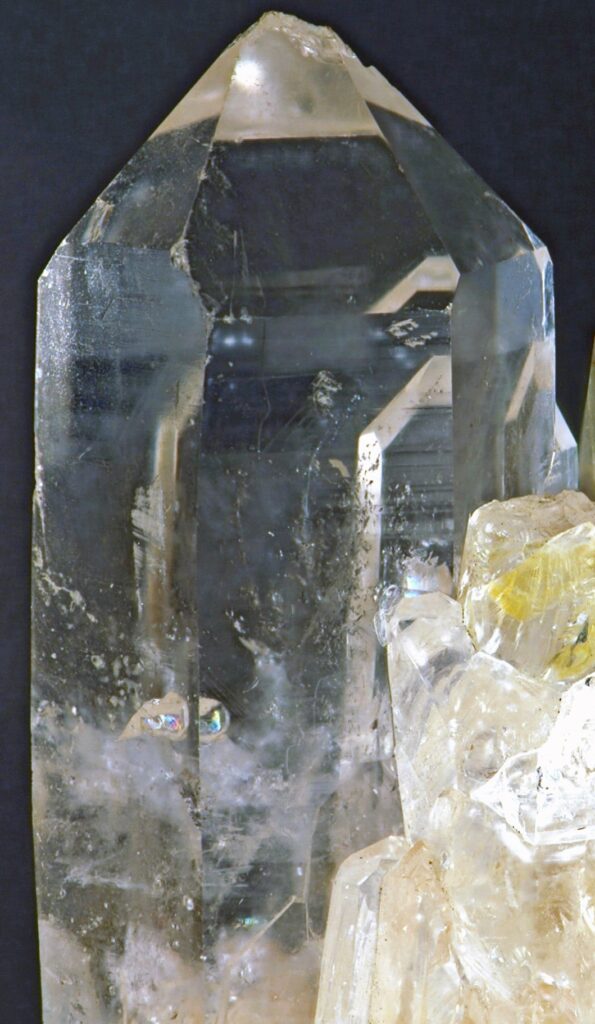
A crystal has an orderly, repeating internal arrangement of atoms. Its familiar external geometry can reflect that arrangement: natural crystal faces develop during growth, and their relationships are connected to the symmetry inside the material. (geoinfo.nmt.edu)
However, a crystal does not need to look like a pristine display specimen. GIA explains that a well-formed quartz crystal and a shapeless quartz pebble can have the same composition and crystal structure. Losing the visible point does not automatically remove the internal order. (elearning-samples.gia.edu)
This distinction matters when comparing natural specimens with polished objects:
- Natural crystal faces are surfaces developed during crystal growth.
- A carved outline tells you the shape an object was given.
- Internal crystal structure concerns the arrangement within the material.
Ask the seller whether a point, cube or other geometric outline is naturally grown or shaped. Do not use the outline alone to establish the material’s identity. External appearance can be affected by growth conditions, and visible features are insufficient for positive identification. (geoinfo.nmt.edu)
Scientists can investigate internal order using X-ray diffraction. A photograph of the outside is not the same kind of evidence as a structural examination. (smithsonianmag.com)

4. A rock can contain several minerals—or mostly glass
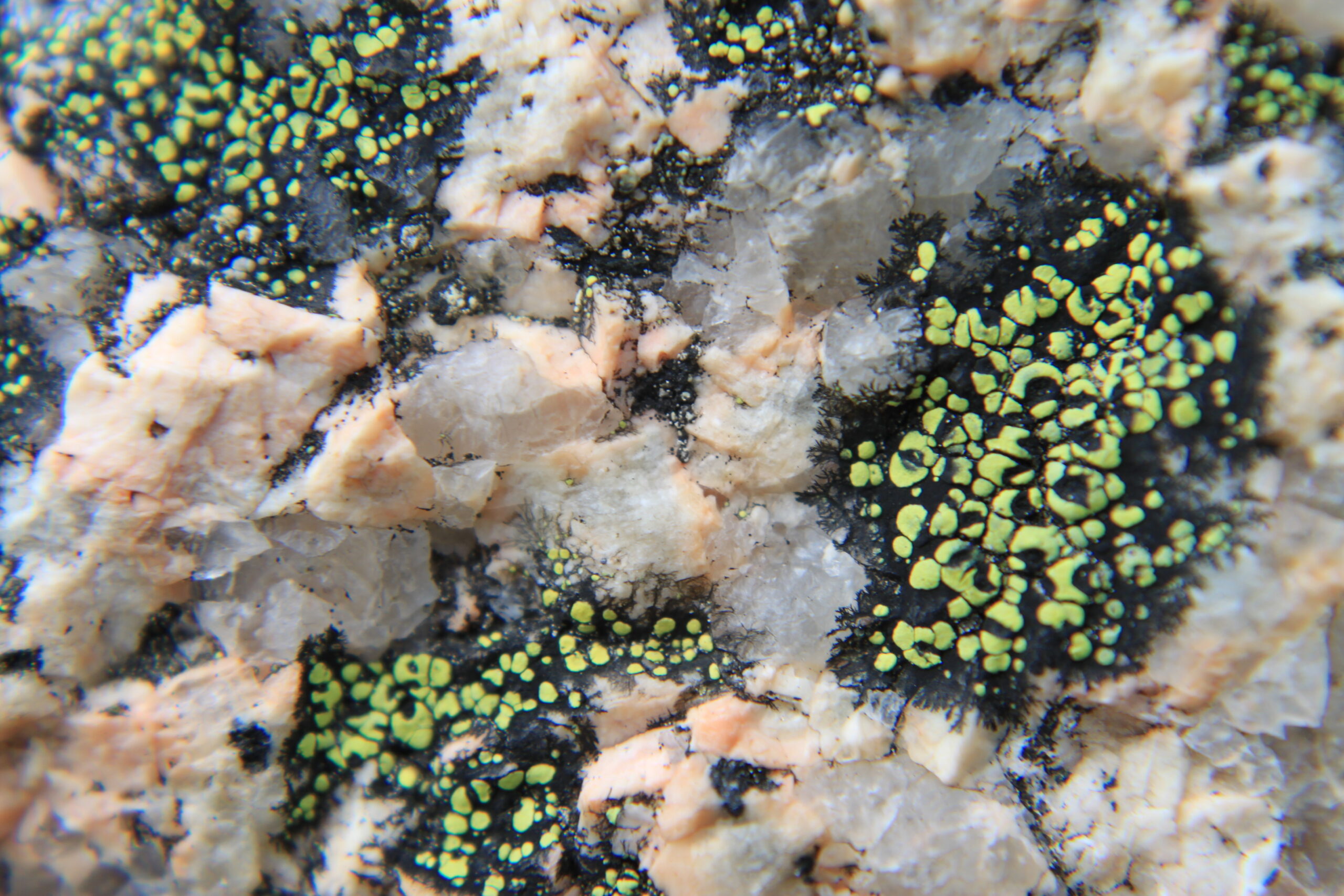
A rock is commonly an aggregate of one or more minerals. That means a single rock sample may contain several materials rather than represent one mineral species. (usgs.gov)
Granite is the useful everyday example. The Smithsonian illustrates granite containing quartz, feldspar and biotite. Calling the whole sample “quartz” would confuse one ingredient with the rock containing it. (naturalhistory.si.edu)
Think of the difference this way: identifying a component is not necessarily identifying the entire specimen. If a label names a mineral, ask whether it refers to the whole object or to crystals growing within a surrounding rock.
There is also an important exception to the shortcut “rocks are collections of crystals.” Obsidian is a naturally occurring volcanic glass that forms when silica-rich lava cools rapidly. It is a rock, even though its glassy material lacks the ordered structure associated with crystals. (usgs.gov)
So “rock” does not mean “several different minerals,” and it does not guarantee that every part is crystalline.

5. A gemstone is a use category, not a separate mineral species
“Gemstone” is not another level of mineral classification. USGS describes gems as mineral or organic materials used for personal adornment, display or objects of art because of qualities such as beauty, rarity and durability. (usgs.gov)
Ruby shows how these descriptions overlap. Its mineral species is corundum, and ruby is a variety within that species. Sapphire is another corundum variety. The gemstone name adds information without replacing the underlying mineral identity. (gia.edu)
Likewise, quartz can occur as a rock-forming mineral or be used as gem material. The Smithsonian’s quartz collection illustrates its many colors, forms and decorative applications. (naturalhistory.si.edu)
For a buyer, treat “gemstone” as the beginning of a question, not the end:
- What material is it?
- Is it natural or laboratory-grown?
- Has it been treated?
- What evidence supports the description?
- Is it appropriate for the use you have in mind?
The word alone does not provide those answers. An identification process must examine the particular item; GIA’s colored-stone procedure includes microscopy and analytical testing to determine identity and detect treatments. (gia.edu)
6. Glass, organic gems and laboratory-grown crystals explain the exceptions
Ordinary glass is amorphous, meaning it lacks the repeating internal structure of a crystal. Manufactured glass is not a mineral under the natural-material definition. Glass can nevertheless be used to imitate a gemstone. (elearning-samples.gia.edu)
For example, red glass used in place of ruby is a simulant. The term describes its role as a look-alike, not a shared material identity.
Synthetic ruby is different. Synthetic gems have essentially the same composition and structure as their natural counterparts. A laboratory-grown ruby can therefore be crystalline, but it is not a naturally occurring mineral specimen. “Synthetic” and “imitation” are not interchangeable. (elearning-samples.gia.edu)
Organic gem materials make another useful exception. Natural pearls and coral come from animals; amber comes from plants. They belong in gem education even though they are not ordinary examples of mineral species. (elearning-samples.gia.edu)
These distinctions also affect practical care. GIA warns against ultrasonic cleaning for organic materials such as pearls, coral and amber, as well as certain filled, coated or treated gems. Do not choose a cleaning method merely because an object is called a “gemstone.” Identify the material and relevant treatments first. (gia.edu)
7. Worked example: interpreting “natural ruby crystal”
Suppose a specimen label reads:
“Natural ruby crystal.”
Treat this as a description to interpret—not an identification this article can verify.
First, unpack the name. Ruby identifies a variety of the mineral species corundum. “Crystal” describes internal order and may also be intended to describe a specimen retaining its growth shape. (gia.edu)
Next, isolate the origin claim. “Natural” distinguishes the claimed material from laboratory-grown ruby. It does not, by itself, tell you what examinations support that claim.
Then ask what is missing. Useful questions include:
- Does the label refer to the entire specimen or one crystal in surrounding rock?
- Has the specimen been cut, polished or otherwise shaped?
- Are any treatments known?
- Is the description based on testing, collection records or the seller’s opinion?
For a purchase important enough to require confirmation, ask a qualified gemologist or laboratory about suitable testing. GIA’s published process uses multiple observations and tests rather than relying on appearance alone. (gia.edu)
A cautious collection entry could read: “Sold as natural ruby crystal; identification and treatment status not independently confirmed.” That preserves useful information without inventing certainty.
8. Common mistakes and a specimen-label checklist
The most common mistake is treating the four terms as mutually exclusive. Another is assuming a shiny point must be a crystal—or that a crystalline object must have formed naturally. Structure, identity and origin are separate questions. (elearning-samples.gia.edu)
Also avoid confusing a mineral within a rock with the entire rock, or treating a gemstone look-alike as a synthetic version of that gemstone. Granite can contain quartz; glass can imitate ruby without being synthetic corundum. (naturalhistory.si.edu)
Use this checklist when reading a specimen label or product description:
- Find the material name. Does it identify a mineral species, variety, rock or manufactured material?
- Separate identity from shape. Record “point,” “cube” or “carving” separately from the claimed material.
- Clarify origin. Is the item described as natural, laboratory-grown, an imitation or unknown?
- Ask about treatments. Request information rather than assuming silence means untreated.
- Check what the description covers. Is it the whole object, one crystal or a component?
- Record the evidence. Keep seller descriptions, documentation and laboratory findings distinguishable.
- Keep uncertainty visible. Use “reported,” “sold as” or “unconfirmed” where appropriate.
- Confirm care before cleaning. Treatments and material identity can change which methods are suitable. (gia.edu)
For an unidentified object, begin with non-destructive observations: photographs, visible color, shape and any attached label. Avoid improvised destructive tests, and do not upgrade a visual guess into a confirmed identity. GIA specifically notes that size, shape, transparency and color are not consistent enough to identify a mineral positively. (elearning-samples.gia.edu)
The practical takeaway is simple: mineral tells you material identity, crystal tells you internal order, rock tells you geological context, and gemstone tells you decorative use. Ask which question a label answers—and which questions it leaves open.