Quick answer
Looking at a gemstone can help you describe it and suggest possible identities, but appearance alone usually cannot confirm what it is. Gemologists combine observations with measurements and appropriate tests. Establishing whether a stone is natural, laboratory-grown or treated may require additional laboratory analysis. Use visual clues to decide what to investigate—not as proof before buying, selling or choosing a cleaning method. (gia.edu)
Appearance helps narrow the possibilities—not settle the identity
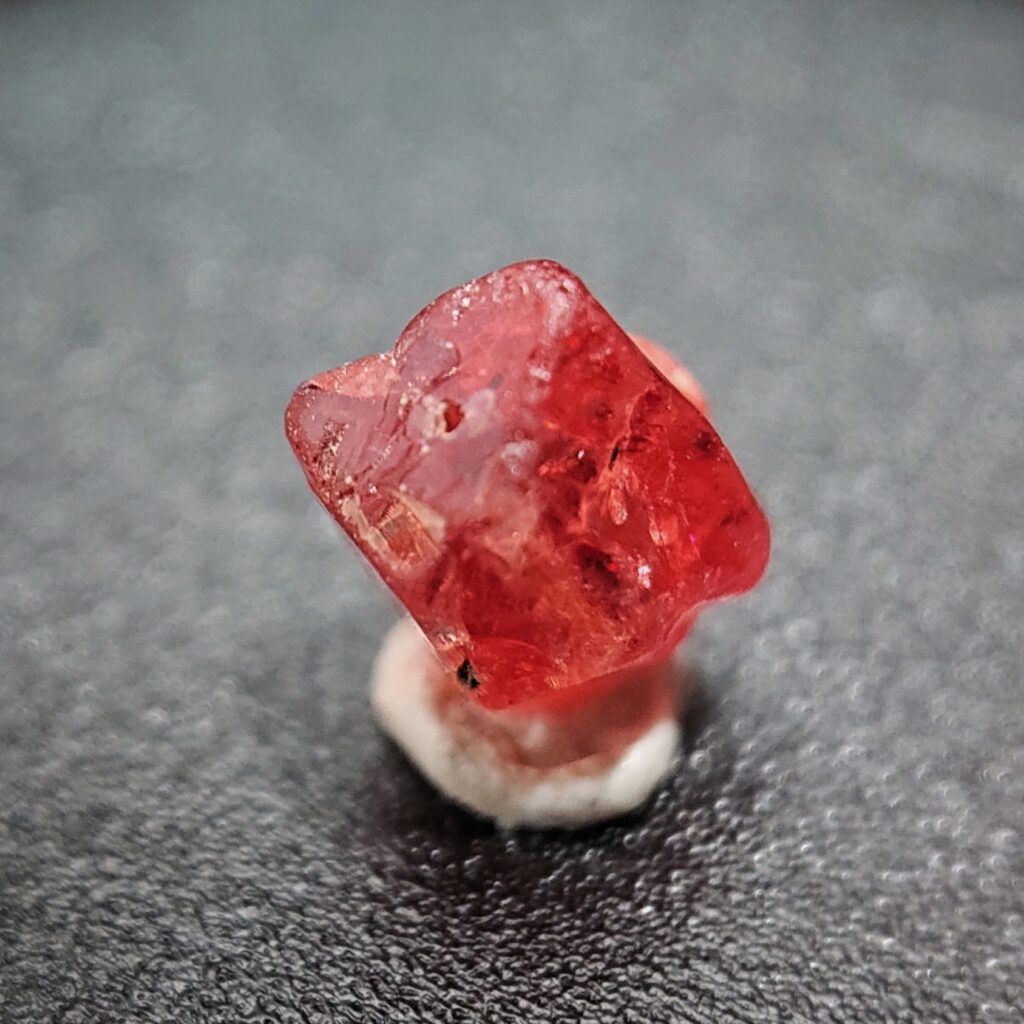
A useful first observation is “transparent, purplish-red, oval-cut stone.” That records what you can see without turning a possibility into a conclusion.
“Untreated natural ruby” is a different kind of statement. It makes claims about material identity, how the stone formed and whether its appearance has been altered. Those are questions for gemological examination, not simply a color match. GIA’s identification reports distinguish gemstone type, natural or laboratory-grown status, and detectable treatments. (gia.edu)
Red stones show why this matters:
| Possible material | Why it belongs on a red-stone shortlist | What appearance does not establish |
|---|---|---|
| Ruby | Ruby is the red variety of corundum. | Whether the stone is ruby, natural or laboratory-grown, and whether treatment is detectable. (origin.prod.gia.edu) |
| Red spinel | Red spinel can rival ruby’s color, despite being a different mineral. | Whether a similar-looking stone is spinel rather than ruby. (gia.edu) |
| Red garnet | Pyrope and almandine garnets include purple-to-red or orangy-red colors. | Which garnet composition or variety is present—or whether the stone is garnet at all. (gia.edu) |
| Laboratory-grown ruby | Synthetic counterparts have essentially the same chemical, physical and optical properties as their natural equivalents. | Natural formation cannot be established from attractive color or sparkle. (origin.prod.gia.edu) |
This is a shortlist, not a complete list of red materials. Nor does resemblance make a correctly disclosed spinel or garnet an imitation. The question is whether the seller’s description matches the material.
Practical rule: write down observations separately from proposed identities. “Red stone; seller describes it as ruby; identification not independently checked” is a more useful record than an unsupported label.

Check color under consistent lighting
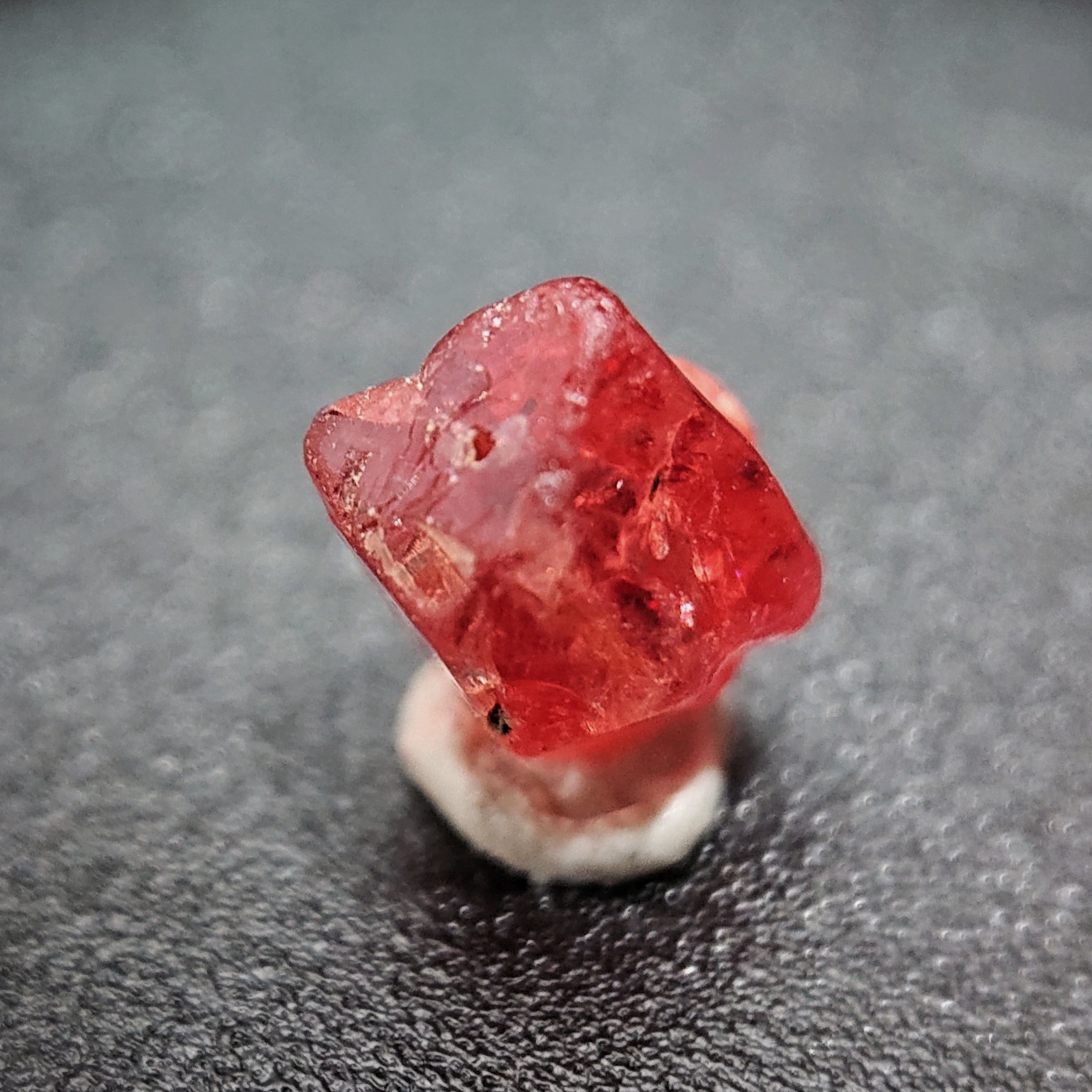
Color is worth recording, but it is not a unique identifier. The red ranges of ruby, spinel and garnet overlap. A transparent gemstone’s apparent hue, darkness and color intensity can also depend considerably on its size and cut. (gia.edu)
Start with a neutral background and one light source at a time. Describe:
- Main color: red, blue, green or another basic color.
- Secondary impression: purplish red, orangy red or yellowish green.
- Lightness or darkness: pale, medium or dark.
- Distribution: apparently even, patchy or arranged in bands.
Then rotate the stone gently and repeat the observation under a different ordinary light source. Note the conditions rather than relying on memory.
Do not confuse two different effects. A change associated with viewing direction can involve pleochroism, meaning different colors seen in different crystal directions. A change associated with the light source is a separate observation. Ruby, for example, can show red-to-purplish-red and orangy-red directional colors. (gia.edu)
For photographs, keep an unedited version and record the lighting used. Treat the photograph as documentation, not authentication. Laboratory color assessment uses controlled lighting and comparison materials; a casual photograph does not reproduce that examination. (gia.edu)
Common mistake: matching one online photograph and stopping. Use a resemblance to generate questions, not to eliminate every other candidate.

Use transparency and inclusions as clues
Transparency describes how much light passes through a material. In plain language, transparent material permits a clearer view through it; translucent material transmits light without a clear view; opaque material does not transmit visible light through the observed thickness. Gemological records distinguish these categories. (gia.edu)
Record what you actually observe. “Appears transparent around the edges but dark through the center” is preferable to forcing an uncertain observation into a category.
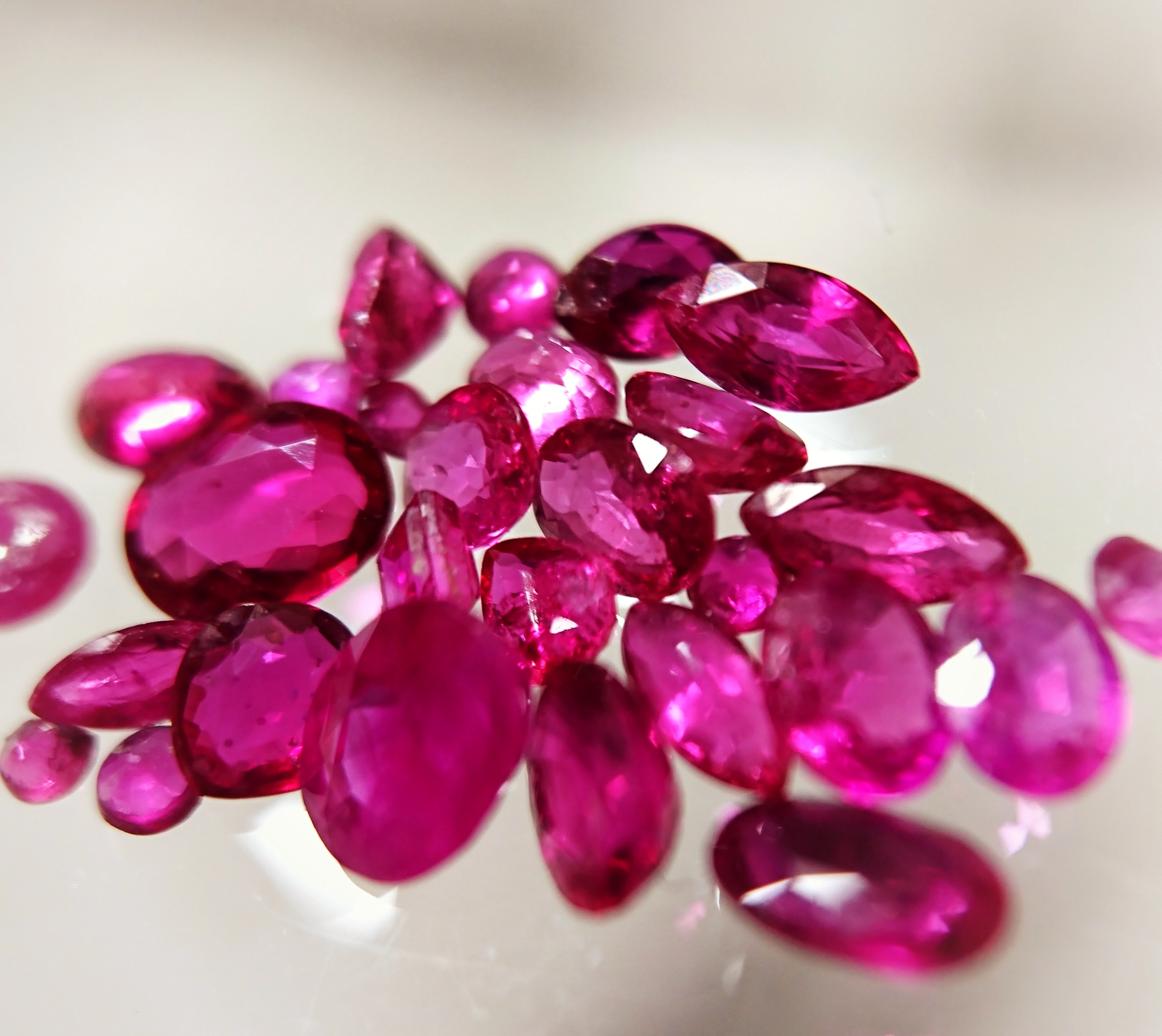
Next, look for inclusions: internal features such as small crystals, needles, clouds, fractures or growth patterns. Rubies can contain needles, crystals, color zones and fingerprint-like features. Some inclusions affect transparency, while others contribute to optical effects. (gia.edu)
An optional 10× loupe can help you document visible features. It does not make interpretation automatic. GIA’s ruby inclusion research illustrates features in natural, synthetic and treated stones, including features that require a gemological microscope to examine properly. (gia.edu)
Avoid these shortcuts:
- “It has inclusions, so it must be natural.” Synthetic rubies also contain internal features. (gia.edu)
- “It looks clean, so it must be synthetic.” Some red garnets typically lack eye-visible inclusions. (gia.edu)
- “Those clouds look natural, so laboratory testing is unnecessary.” GIA has documented a laboratory-grown ruby with natural-looking clouds that required careful examination and chemical analysis. (gia.edu)
Describe an uncertain feature as “small round feature” or “needle-like lines.” Leave its interpretation open.
Record dimensions without treating size as identity
Keep three descriptions separate:
- Shape: the outline, such as oval, round or pear.
- Dimensions: measurements, usually recorded in millimeters.
- Carat weight: mass, not visible size. One carat equals 0.2 grams. (gia.edu)
These details help document a stone and compare it with a report. They are not substitutes for identification. GIA’s gem database records shape, weight and dimensions separately from properties such as refractive index and specific gravity. (gia.edu)
For an unknown stone, begin with any existing documentation. If you record approximate dimensions yourself, label them approximate and avoid pressing measuring tools against the stone.
For mounted jewelry, record the visible shape and keep the seller’s claimed weight separate from your observations. Do not weigh a ring and report that number as the gemstone’s weight. Likewise, do not remove a stone merely to obtain a measurement; ask an appropriate professional what can be established while it remains mounted.
Common mistake: assuming a large-looking stone must have a particular carat weight—or that a familiar jewelry cut identifies the mineral. Treat dimensions and shape as descriptive information.
Follow a safe observation checklist
The aim of home observation is to prepare useful information while leaving the item unchanged.
- Preserve the item as received. Keep packaging, receipts, labels and seller descriptions.
- Assign a simple item label. Use “red oval stone A” rather than an unverified mineral name.
- Inspect over a tray or soft surface. Avoid handling loose stones where a dropped item would be difficult to recover.
- Record color and lighting. Include the background and light source in your notes.
- Describe transparency and visible features. Separate observations from interpretations.
- Photograph accessible views. Include face-up and side views when possible, without forcing the item out of its setting.
- Record dimensions and weight claims separately. Identify which information you observed and which came from a seller.
- List the unresolved questions. Material identity, natural or laboratory-grown status, treatments and origin are separate questions.
Do not scratch the stone, test it against glass, apply heat or introduce chemicals to “see what happens.” A scratch test is not a reliable shortcut to a complete identity: GIA notes that many materials can scratch glass, so that result does not prove diamond. (gia.edu)
Until the material and treatment status are established, avoid choosing a cleaning procedure based on a guess. Ask for care guidance specific to the identified item.
Your notes should end with something like “identity not confirmed”, not a confident name derived from one appealing clue.
Understand what professional testing adds
Gemologists compare several lines of evidence rather than relying on one visual impression. Standard colored-stone examination can include a refractometer, polariscope, dichroscope, spectroscope and specific-gravity testing. Not every test is appropriate for every stone; size and transparency affect which methods can produce useful information. (gia.edu)
These tools answer different questions:
| Method | What it contributes |
|---|---|
| Refractometer | Refractive-index readings, compared with other recorded properties. (gia.edu) |
| Polariscope | Evidence about whether a material is singly refractive, doubly refractive or an aggregate. (store.gia.edu) |
| Spectroscope | An absorption pattern that can help a gemologist identify a material. (gia.edu) |
| Microscope | Examination of internal and surface features, including evidence relevant to treatments, growth and assembled stones. (gia.edu) |
| Advanced laboratory analysis | Additional evidence about material identity, certain treatments, natural or laboratory-grown status, or geographic origin. (gia.edu) |
Worked example: a natural-looking ruby that was laboratory-grown
GIA documented a vivid red stone mounted in a ring. Its gemological properties established that it was ruby. Under magnification, however, the evidence was less straightforward: some milky clouds looked natural, while other inclusions suggested flux-grown synthetic ruby.
The laboratory compared the inclusions with trace-element chemistry and concluded that the ruby was laboratory-grown. The lesson is important: identifying the material as ruby did not establish natural formation, and natural-looking clouds did not settle the question. (gia.edu)
Ask about proposed methods before submission. Do not assume every advanced test is entirely non-invasive: GIA describes laser-ablation chemical analysis as removing a tiny amount of material. (gia.edu)
Decide when identification—and a report—matters
Seek professional identification when an unresolved claim would change your decision. Examples include a purchase described as natural ruby, an inherited stone you plan to sell, or jewelry whose treatment status needs clarification.
Start by asking:
- What material is this, and which tests support that conclusion?
- Has natural or laboratory-grown status been established?
- Were treatments investigated, and what limitations apply?
- Can the necessary examination be completed while it remains mounted?
- Would a laboratory report answer the question, or is further analysis needed?
GIA’s colored-stone identification report describes gemstone type, natural or laboratory-grown status, detectable treatments and identifying details such as measurements, cutting style, color and a photograph. Geographic-origin assessment is a distinct report service and is provided only when applicable and determinable. (gia.edu)
If a seller supplies a report, compare its description, photograph and measurements with the offered item. Ask the issuing laboratory how to verify the report. Read the actual conclusions rather than relying on the seller’s summary.
Do not treat an identification conclusion as an answer to every buying question. Ask separately about price, return terms, sourcing documentation and appropriate care.
The useful distinction is simple: appearance tells you what to investigate; testing establishes what can responsibly be claimed. Good beginner practice is not guessing more confidently. It is keeping observations, seller claims and verified conclusions separate.