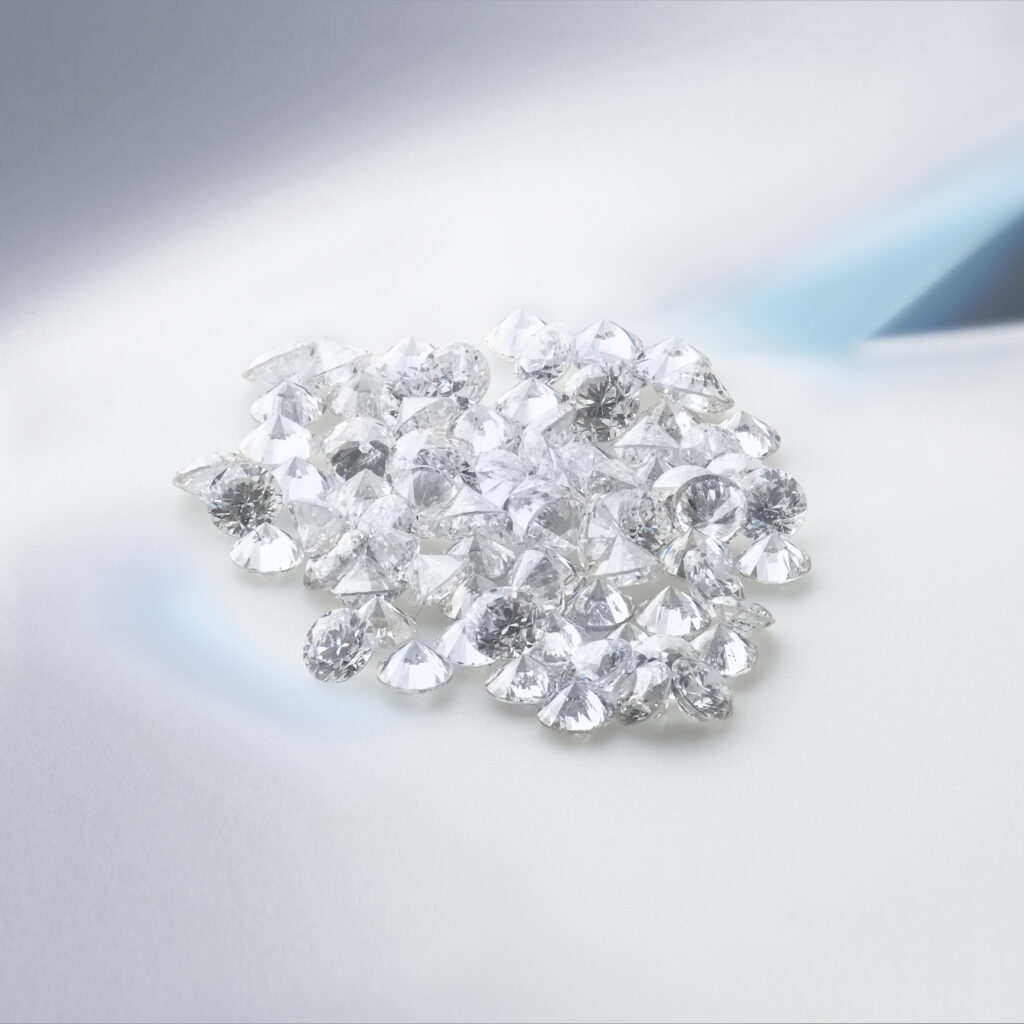
Quick answer
- Natural describes a gem that formed in nature.
- Laboratory-grown describes a manufactured gem with essentially the same chemical, physical and optical properties as its natural counterpart.
- Simulated describes a material used to resemble another gem—not necessarily the same material.
A laboratory-grown diamond is diamond; cubic zirconia and glass used to imitate diamond are not. Read both the origin description and the material name before buying. These definitions describe what a label claims, not proof that an individual stone has been correctly identified. (gia.edu)
1. Separate material identity from growth origin
The most useful way to read a gemstone description is to ask two questions:
- What material is this?
- Did it form naturally or was it manufactured?
“Laboratory-grown diamond” answers both: the material is diamond, and its growth took place in a laboratory. “Simulated diamond” tells you that the stone imitates diamond, but leaves its actual material unspecified. GIA identifies glass and cubic zirconia as common diamond simulants. (gia.edu)
These categories are not a simple ladder from “good” to “bad.” They describe different things. Natural and laboratory-grown concern origin; simulated concerns a material’s use as a substitute.
A simulant can even be natural. For example, natural colorless sapphire or zircon can be used to imitate diamond. The stone is natural sapphire or zircon, but it remains a diamond simulant—not a natural diamond. (4cs.gia.edu)
For practical shopping, write down the complete description rather than a shortened name. Record “laboratory-grown diamond” or “cubic zirconia,” not just “diamond-like stone.”
If the listing does not supply enough information to do that, ask for clarification before comparing prices.
2. What “natural” establishes—and what it does not
For diamond, “natural” distinguishes a stone formed by geological processes from one grown in a laboratory. Both natural and laboratory-grown diamonds are crystalline carbon, but their growth histories differ. (gia.edu)
Do not read “natural” as a complete description of the purchase. In particular, it does not automatically mean “untreated.” Treatment disclosure is a separate issue: the U.S. Federal Trade Commission’s Jewelry Guides address treatments that are impermanent, create special care requirements or significantly affect value. (ecfr.gov)
A useful buying record therefore separates three entries:
- Identity: What is the material?
- Growth origin: Natural or laboratory-grown?
- Treatment information: What has been disclosed or detected?
Keep other claims separate too. If a seller also claims a particular country of origin, responsible sourcing or exceptional quality, ask what evidence supports that specific statement. Do not treat the word “natural” as evidence for those additional claims.
When natural origin matters to your purchase, ask how it was established. A seller’s written description is worth keeping, but for a significant purchase, consider an independent laboratory report. GIA’s supplied buying guidance recommends laboratory confirmation when there is doubt about a substantial gemstone purchase.
3. Laboratory-grown means the named gem—not any laboratory-made look-alike
In gemology, a synthetic gem is a laboratory-made material that shares essentially the characteristics of its natural counterpart. “Synthetic” does not simply mean “an imitation.” GIA’s examples include laboratory-grown diamond, ruby, sapphire and emerald. (gia.edu)
A laboratory-grown diamond has essentially the same chemical, physical and optical properties as natural diamond. That does not make their growth histories indistinguishable: specialized examination can reveal differences associated with how they formed. (gia.edu)
The material name after “laboratory-grown” matters:
- Laboratory-grown diamond: diamond produced in a laboratory.
- Laboratory-grown sapphire: sapphire produced in a laboratory.
- Laboratory-made cubic zirconia: cubic zirconia, not diamond.
U.S. disclosure guidance makes this distinction important. The FTC says that descriptions such as “laboratory-grown” or “synthetic,” when attached to a natural stone’s name, should only describe a product with essentially the same optical, physical and chemical properties as that named stone. (ftc.gov)
If someone says only “lab stone,” ask them to finish the description. “Made in a laboratory” is an origin statement, not a material identification.
Likewise, avoid asking only whether a stone is “real.” Ask the more precise question: “Is this diamond, and is it natural or laboratory-grown?”

4. Compare diamond, cubic zirconia and glass by material
The following comparison shows what a properly used label allows you to infer. It does not authenticate a stone offered for sale.
| Description | Material identity | Origin or role | Is it diamond? |
|---|---|---|---|
| Natural diamond | Crystalline carbon in diamond’s structure | Formed naturally | Yes |
| Laboratory-grown diamond | Crystalline carbon in diamond’s structure | Grown in a laboratory | Yes |
| Cubic zirconia, or CZ | Zirconium oxide material | Manufactured CZ can imitate diamond | No |
| Glass diamond simulant | Glass | Used to imitate diamond | No |
GIA distinguishes natural and laboratory-grown diamond from simulants and describes CZ production using zirconium oxide. It also identifies glass as a diamond substitute. (gia.edu)
Worked example: reading four hypothetical listings
Suppose you are comparing these descriptions:
- A: “Natural diamond pendant.” This claims diamond identity and natural origin. Ask separately about treatments and supporting documentation.
- B: “Laboratory-grown diamond pendant.” This claims diamond identity and laboratory origin. Do not reinterpret it as CZ.
- C: “Simulated diamond pendant—cubic zirconia.” This names the substitute material. Evaluate it as CZ jewelry.
- D: “Lab-created diamond-style pendant.” This is unclear. “Diamond-style” describes appearance, while “lab-created” does not identify the material.
For D, send a direct question: “What is the center stone’s actual material: diamond, cubic zirconia, glass or something else?”
These are illustrative listings, not actual products or authenticated specimens. The exercise is about extracting the seller’s claim and spotting missing information.
When comparing different materials, request dimensions as well as weight. Simulants have different densities, so equal carat weights do not necessarily produce equal-sized stones. (4cs.gia.edu)
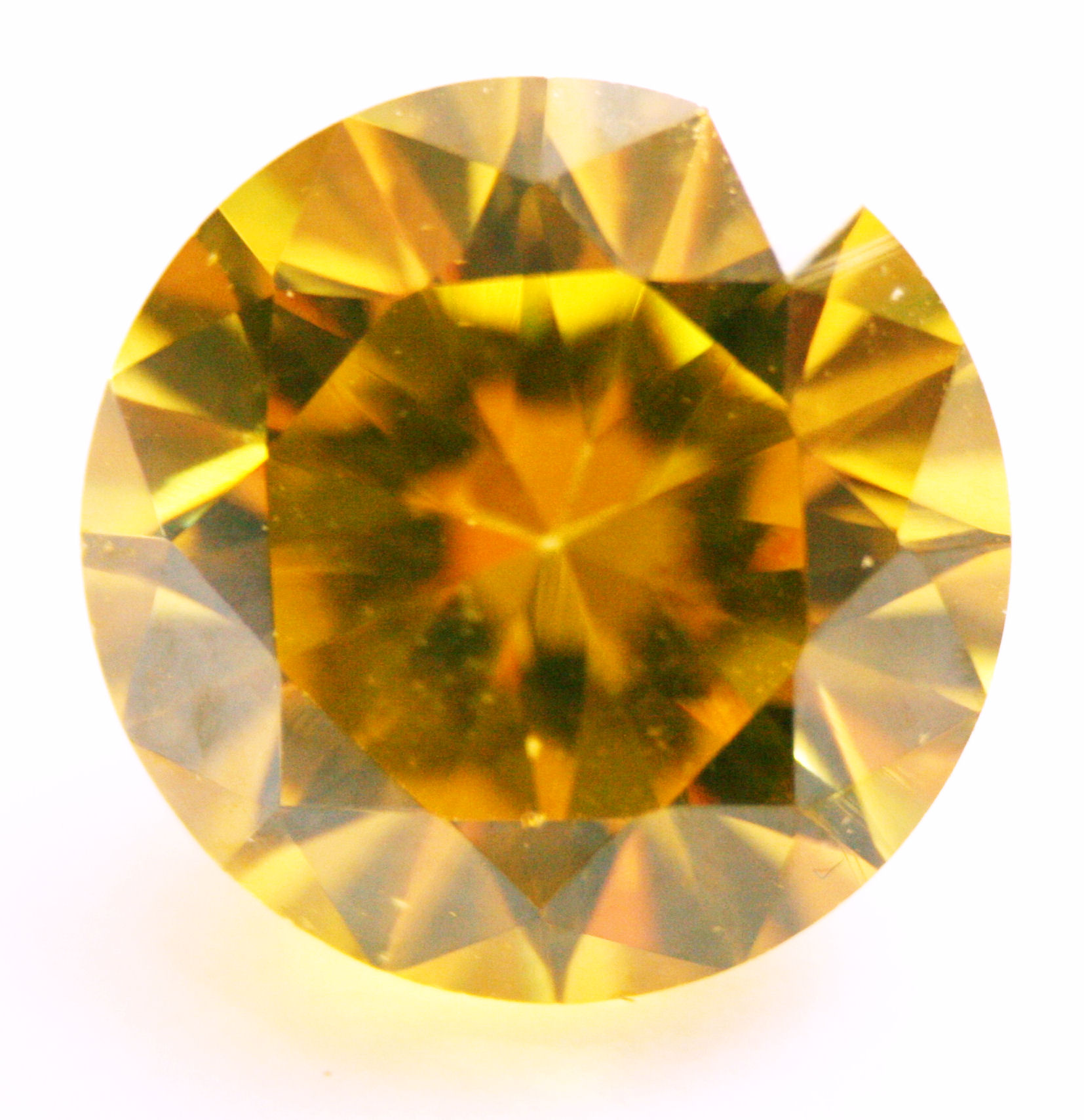

5. Recognize wording that leaves the identity unclear
Start with the product title, then read the specifications and full description. Look for a consistent material name and a clear origin statement.
In U.S. guidance, the FTC says disclosures should be clear, conspicuous and close to the use of “diamond.” They should appear early in the description, rather than being hidden on a separate education page or at the end of lengthy text. (search.ftc.gov)
Give these terms extra attention:
- “Simulated” or “imitation”: Ask what material is doing the imitating.
- “Synthetic”: Read the complete phrase. Synthetic diamond and synthetic CZ are different materials.
- “Cultured”: Do not assume this supplies a complete origin disclosure.
- “Faux”: The FTC’s Jewelry Guides expressly say this is not an adequate disclosure that a stone is not mined.
- “Diamond-like,” “diamond-style” or “alternative”: Ask for a material name instead of relying on the resemblance language. (ecfr.gov)
“Cultured” can be used for qualifying laboratory-created gemstone products under the Guides, but it needs a clear, conspicuous disclosure conveying their non-mined origin. (ecfr.gov)
Also keep environmental claims separate from material identity. “Laboratory-grown” does not itself substantiate an environmental benefit. FTC guidance says advertisers need a reasonable basis for environmental claims and should avoid unsupported broad claims such as “environmentally friendly.” (search.ftc.gov)
If the title suggests one material while the specifications name another, pause the purchase. Ask the seller to provide one unambiguous description in writing.
6. Know what appearance and testing can establish
A photograph can show an advertised stone’s appearance, but it cannot establish natural versus laboratory-grown diamond origin. GIA explains that these diamonds are essentially chemically and optically alike and that conclusive origin identification requires advanced testing. (gia.edu)
Do not use a scratch test as a shortcut. GIA’s supplied identification FAQ explains that many materials can scratch glass; doing so does not confirm diamond identity. There is no reason to risk damage to answer a question that the test cannot settle.
When speaking to a jeweler or gemologist, distinguish these questions:
- Is this material diamond rather than a simulant?
- If it is diamond, is it natural or laboratory-grown?
- Are any treatments detected?
Ask whether the proposed examination answers all three, or only screens the material for further testing.
For colored stones, GIA’s supplied explanation describes microscopic examination and analytical investigations to establish identity and detect treatments. Its alexandrite guidance also shows why report scope matters: identification and origin reporting are not the same as quality grading.
If a report accompanies the stone:
- Check the issuing laboratory and report type.
- Read its actual findings, not just the seller’s summary.
- Use the laboratory’s report-check service where available.
- Compare the recorded description and measurements with the offered item.
- Ask a qualified professional to help establish that the report belongs to that stone.
GIA’s supplied buying guidance specifically advises checking that report information matches its archived record. A matching database entry is a useful document check; it should not replace checking the physical item.
7. Use a short checklist before paying
Ask the seller:
- What is the exact material name?
- Is it natural or laboratory-grown?
- If it is a simulant, what material is it?
- What treatments are disclosed?
- Does it have special care requirements?
- What does any laboratory report actually establish?
- Does the description cover every stone, or only the center stone?
- Will the invoice repeat the full material and origin description?
- Can I arrange independent examination within the return period?
Request care information rather than borrowing cleaning advice from the gem being imitated. A treatment can introduce special care needs, and FTC guidance calls for disclosure when that happens. (ecfr.gov)
Save the listing, written answers, report and invoice together. For a collection, use the same precise description on the specimen label. If an identity is only seller-stated, record that limitation rather than presenting it as laboratory-confirmed.
The main mistakes to avoid are treating laboratory-grown diamond as CZ, assuming natural means untreated, accepting “simulated” without a material name, and using appearance as proof of origin. The definitions and testing limitations above explain why each shortcut fails. (ftc.gov)
You can choose a natural gem, a laboratory-grown gem or a clearly disclosed simulant. The practical goal is the same: know what material you are buying, understand the origin claim, and keep evidence proportionate to what matters to you.